
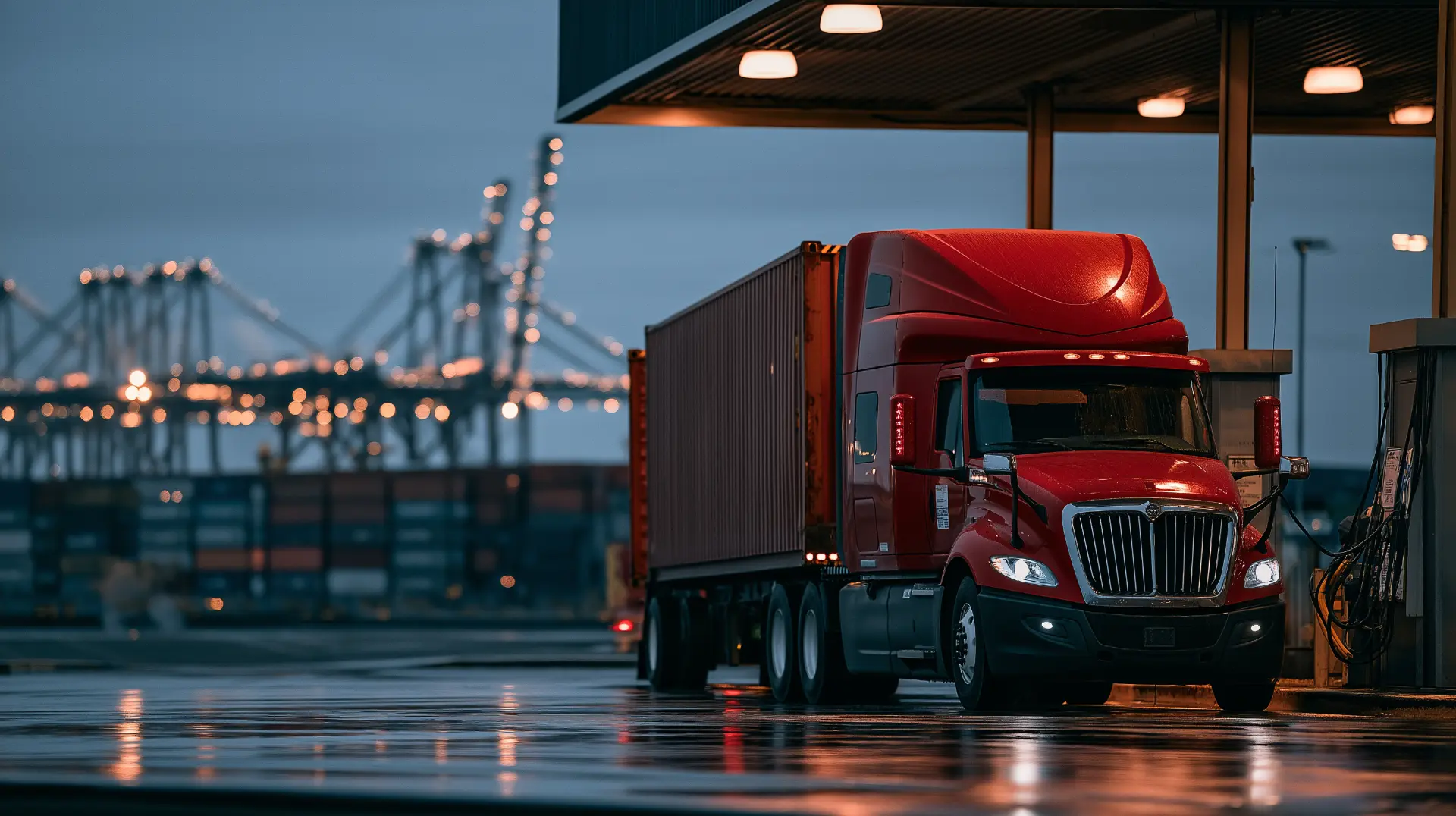
Chicago Drayage Services and the $4.49 Fuel Whipsaw
Chicago's average gas price is back to $4.49 a gallon. Some downtown stations are posting $5.19. This time last year the average sat near $3.60. If you move containers through this market, those numbers are not background noise. They are a preview of what your fuel line is going to do over the next few weeks.
Axios Chicago reported the jump, citing GasBuddy data, and tied it directly to geopolitics. Prices dipped during the ceasefire in the Iran war, then climbed again once attacks resumed. Nationally the average has risen to $4.09 after a recent low of $3.70 in late June. Chicago is running roughly 40 cents above that national figure.
The good news is relative
Axios makes a fair point on the upside. Chicago's average peaked at $5.29 in mid-May. Against that, $4.49 looks like relief.
But that is exactly the issue for anyone budgeting freight. A market that runs $5.29 in May, dips during a ceasefire, and snaps back to $4.49 in early August is not a market you can plan against with one fixed annual assumption. The direction is unpredictable. The speed is the part that hurts.
Gasoline is not diesel, but the driver is the same
What Axios tracked is retail gasoline. Drayage runs on diesel, and diesel has its own refinery, inventory, and seasonal dynamics. The two do not move in lockstep.
They do share a parent, though, and that parent is crude. Crude is what moves on Strait of Hormuz headlines. When the national gasoline average climbs 39 cents in about six weeks off a conflict story, diesel buyers should not assume they get a pass. Fuel surcharges across container drayage Chicago lanes tend to follow with a lag, then stay elevated after the headlines fade.
Where fuel actually gets burned in drayage
Here is what shippers miss. The biggest fuel exposure in a drayage move is usually not the loaded leg. It is everything around it.
A dry run to BNSF Logistics Park because the container was not available is a full round trip of diesel with no revenue move attached. A truck idling in a ramp queue burns fuel and burns clock. An empty return trip scheduled separately instead of paired with an outbound pickup doubles the miles. Multiply those by a fleet and a fuel spike stops being a percentage and starts being a real number.
So when diesel goes up, the operational answer is not just to raise the surcharge. It is to cut the wasted miles. Street turns where they are possible. Dual transactions instead of two separate trips. Pre-pull the box, park it in a secured yard, and deliver on the receiver's schedule instead of chasing a last free day with an expensive round trip. A container pre pull service and yard storage are cost tools, not just congestion tools, and they matter more when fuel is volatile.
The Indiana line
Axios adds a consumer tip that lands differently for freight people. Cross the Indiana border and gas drops about 70 cents a gallon.
That state line runs right through the middle of Chicagoland freight geography. The major rail ramp drayage Chicago volume sits on the Illinois side. BNSF Logistics Park and UP Global IV are down in the Joliet and Elwood corridor. CSX 59th Street is in the city. But a large share of the warehousing those boxes feed sits in northwest Indiana and along the I-80 and I-65 corridor.
Carriers who run this market every day know where their fuel dollars stretch and route accordingly. It is a small edge. On a fleet running seven days a week, small edges compound.
What asset based means when fuel moves fast
This is where the carrier model matters. In a brokered arrangement, a fuel spike gets passed through fast because the middle party has no fleet to absorb it and no leverage over the owner operators who do. Capacity re-prices, then re-prices again, and service quality moves around underneath you.
An asset based drayage carrier owns the trucks and employs the drivers. That means the fuel exposure sits with the carrier, and so does the ability to manage it through routing, dispatch density, and equipment discipline. R2R Intermodal runs its own fleet in Chicago and Houston for exactly that reason. When you are quoting a program for a freight forwarder or an NVOCC across a volatile quarter, you want the people quoting the rate to be the same people burning the fuel.
Houston is on the same crude
The Gulf market is not insulated from this. Refinery proximity helps at the rack, but crude is a global price and the Iran headlines hit both coasts.
For port drayage Houston moves out of Barbours Cut, Bayport, and the broader Port of Houston complex, the same math applies. Terminal queue time, empty return trips, and unnecessary repositioning are where diesel disappears. Pre-pull capacity and secured yard space near the terminals cut those miles. So does 24 hour drayage service, because running boxes during off-peak windows means less time sitting in line with the engine on.
What this means for shippers
- Do not build 2026 landed cost models off a single fuel assumption. The Chicago average has covered a range from $5.29 to $4.49 inside three months, and the swings track events nobody schedules.
- Ask your carrier how their fuel surcharge is calculated and what index it references. If they cannot answer plainly, that is your answer.
- Push for fewer trips per container, not just a lower rate per trip. Pre-pull, yard storage, and paired empty returns take miles out of the move permanently.
- Value dispatch density. A carrier with real volume at your ramp or terminal is running loaded in both directions more often than one sending a truck across the metro for a single move.
- Lock in capacity relationships before the next headline, not after. Fuel spikes and capacity crunches tend to arrive together.
Fuel is going to keep moving. What you can control is how many miles each container costs you and who is accountable when the market turns. If you are moving boxes through Chicago rail ramps or Houston terminals and want a straight number from a carrier that owns its trucks, request a drayage quote through the Request a Rate form. Tell us the lane, the volume, and the equipment, including overweight, and we will come back with real pricing and real capacity.